You got promoted because you were great at the work. Then someone handed you a team, and the work that earned you the promotion stopped being the whole job.
Most people get very little preparation for this moment. I’ve led and been led in the Marine Corps, in the investment industry, and in ministry. In every one of those settings, the people who struggled most as new leaders weren’t the least talented. They were the ones nobody had helped prepare.
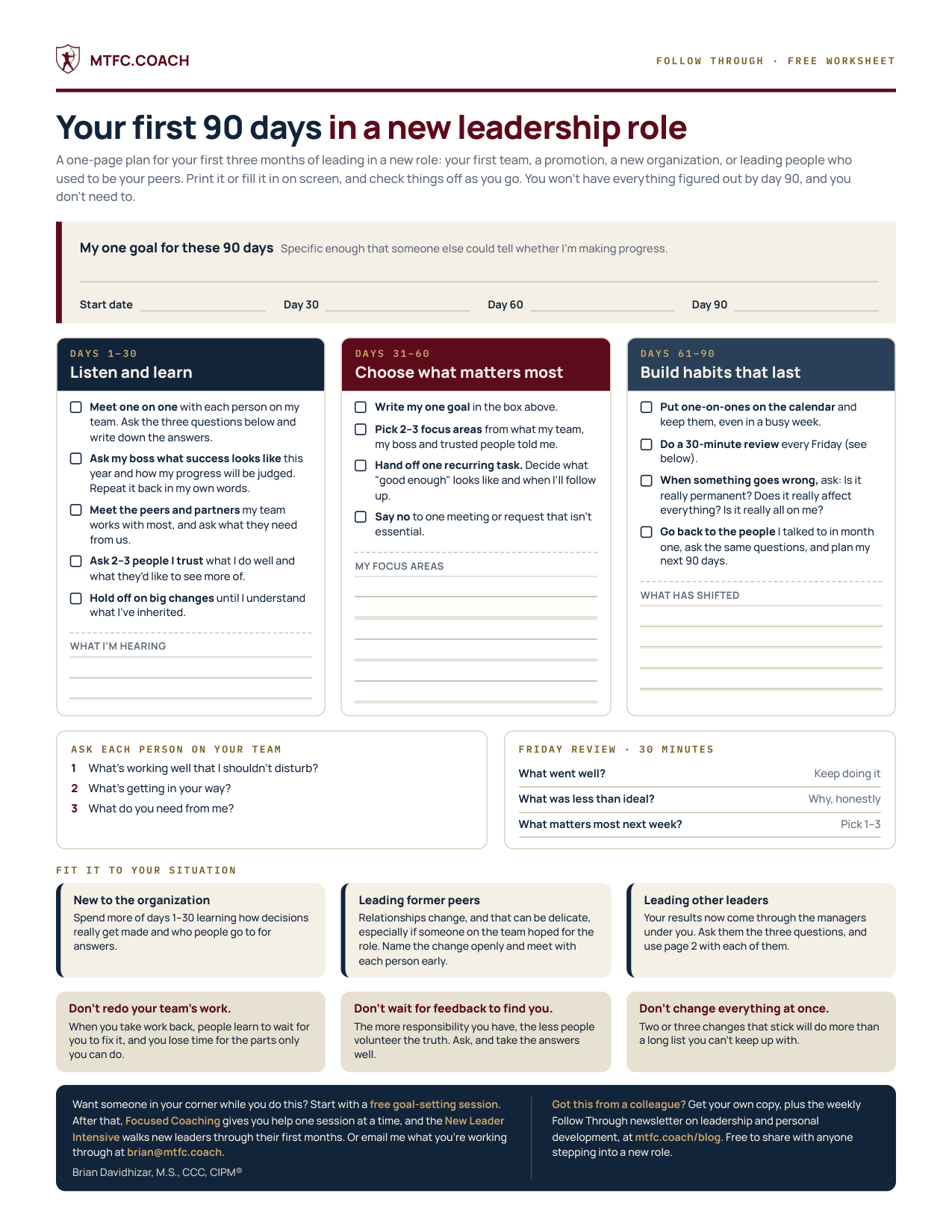
Here’s how I’d suggest spending your first 90 days. You won’t have everything figured out by day 90, and you don’t need to. The goal is to build a strong start and a few habits you can keep.
Days 1–30: Listen and learn
Your first month is for understanding what you’ve inherited. Resist the urge to prove yourself by changing things right away.
Meet with each person on your team, one on one. Ask three questions and write down the answers:
- What’s working well that I shouldn’t disturb?
- What’s getting in your way?
- What do you need from me?
Ask your boss what success looks like. Find out what matters most in your first year, and how your boss will judge your progress. Then repeat it back in your own words to make sure you heard it correctly.
Pay attention to how you come across. The way you see yourself and the way others see you may not match, and that gap gets more important once people report to you. Ask two or three people you trust what you do well and what they’d like to see more of.
Days 31–60: Choose what matters most
By now you’ll have a long list of things you could work on. You can’t work on all of them, and trying to will wear you out.
Name one goal. Put the most important change you want to make into your own words. Keep it specific enough that someone else could tell whether you’re making progress.
Pick two or three focus areas. Look at what you heard from your team, your boss, and the people you trust. Which few changes would make the biggest difference?
Hand something off. This is often the hardest step for a new manager, because doing the work yourself feels faster and safer. Choose one recurring task and give it to someone on your team. Decide ahead of time what “good enough” looks like and how you’ll follow up. Then let them do it, even if they do it differently than you would.
Be willing to say no. A new role brings new meetings and new requests. Some of them matter and some of them don’t. Protect time for the work that’s most essential, and let go of what isn’t.
Days 61–90: Build habits that last
Good intentions fade when the week gets hard. Habits hold up better, so use this month to build a few simple ones around your focus areas.
Hold regular one-on-ones. Put them on the calendar and keep them, even in a busy week. Your team will learn what matters to you from what you protect.
Do a short weekly review. Set aside 30 minutes on Friday to look at what went well, what slipped, and what matters most next week.
Prepare for setbacks. Something will go wrong. The way you explain a bad outcome to yourself shapes how quickly you recover from it. When it happens, ask whether the problem is really permanent, whether it really affects everything, and whether it’s really all on you.
Check your progress. Go back to the people you talked to in your first month and ask the same questions. Look at what has shifted and what still needs work. Then write down what you’ll focus on for the next 90 days.
Three common mistakes
Redoing your team’s work. When you take work back, you teach people to wait for you to fix it. You also run out of time for the parts of the job only you can do.
Waiting for feedback to find you. The more responsibility you have, the less likely people are to tell you the truth unprompted. You’ll need to ask, and you’ll need to take the answers well.
Trying to change everything at once. Two or three focused changes that stick will do more for your team than a long list you can’t keep up with.
Getting help with the transition
Leading people is a skill, and you can learn it. It helps to have someone in your corner while you do.
That’s why I built the New Leader Intensive. It’s 36 weeks of one-on-one coaching for professionals who are new to leading, or next in line, with 18 sessions built around your goals and honest feedback from the people you work with.
If you’d like to talk through where you are first, you can book a free goal-setting session.